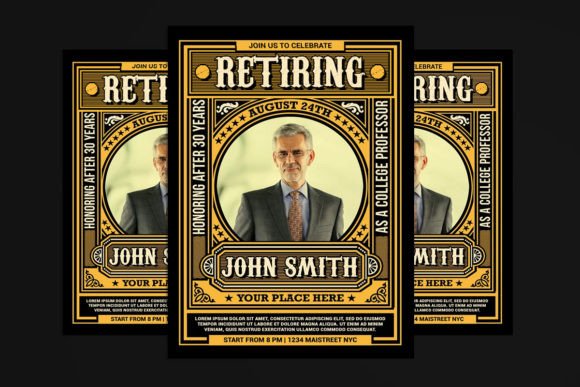
Retirement Invitation Design Template
In the fast-paced world of visual communication, a Retirement Invitation serves as more than just a piece of paper; it is a pivotal moment where personal milestones meet professional design standards. When you are tasked with creating an event that honors a career spanning decades, the quality of your creative assets directly influences the emotional impact on your audience. This is where high-quality, print-ready resources become indispensable for designers seeking to deliver exceptional results without compromising on efficiency or aesthetic appeal.
For graphic designers and marketing professionals, the foundation of any successful project lies in the technical specifications of the tools at hand. Consider a template designed specifically for print production: Model Not Included - Psd Files CS 5. This specification ensures compatibility with industry-standard software while maintaining the integrity of the original artwork. With dimensions set at 8.27x11.69 inches, this format aligns perfectly with standard A4 and Letter paper sizes, complete with necessary bleeds to eliminate white edges during the cutting process. Such attention to detail is what separates amateur drafts from professional presentations.
Technical Precision Meets Creative Flexibility
The value of a design asset extends far beyond its visual appearance. It is about how easily it integrates into your existing workflow. A resolution of 300 dpi guarantees crisp, sharp output when sent to commercial printers, ensuring that every line, curve, and text element remains legible and vibrant. Furthermore, being CMYK ready means you can skip the color conversion headaches often associated with print projects, allowing for accurate color reproduction that matches your brand identity or the celebratory tone of the occasion.
One of the most critical features for modern creatives is the ability to customize quickly. This template features editable fonts with all fonts included for free, removing the frustration of missing typefaces. Whether you are adjusting the typography for a corporate executive or a beloved teacher, the text layers are fully editable. Additionally, the easy-to-change colors allow you to adapt the palette to match specific company branding or the retirement theme, ensuring consistency across all marketing materials.
Why Layer Organization Matters
A well-organized layer structure is the backbone of a smooth design workflow. When layers are logically grouped, renaming, hiding, or modifying elements becomes intuitive rather than tedious. This organization allows designers to:
- Isolate Elements: Quickly adjust specific graphics without affecting the entire composition.
- Streamline Collaboration: Make it easier for team members to understand the file structure and make edits.
- Enhance Efficiency: Reduce the time spent on minor adjustments, allowing more focus on big-picture strategy.
This level of structural clarity is essential not only for print but also for repurposing content for digital channels. The same visual hierarchy that works beautifully on a printed card can be adapted for social media graphics, email headers, or website banners, maximizing the return on investment for your creative effort.
Practical Applications in Modern Branding
While the primary use case might seem limited to event planning, the principles behind a professionally designed invitation apply broadly across various sectors of graphic design. In branding and logo design, the ability to maintain consistent visual language across different touchpoints strengthens brand identity. A cohesive look from a physical invitation to a digital newsletter reinforces trust and recognition among your audience.
In the realm of digital marketing, these templates serve as excellent starting points for editorial layouts and web design components. The clean lines and balanced composition found in a well-crafted invitation can inspire UI design and UX patterns, ensuring that user interfaces remain uncluttered and focused on key information. Similarly, for packaging design and advertising campaigns, the emphasis on visual hierarchy helps guide the viewer's eye to the most important details, whether it is a call to action or a product feature.
When selecting design inspiration for your next project, always evaluate the scalability and readability of the assets. A great creative asset should look equally impressive on a large billboard or a small mobile screen. By choosing resources that prioritize modern aesthetics and functional usability, you ensure that your work stands the test of time and adapts seamlessly to new trends.